
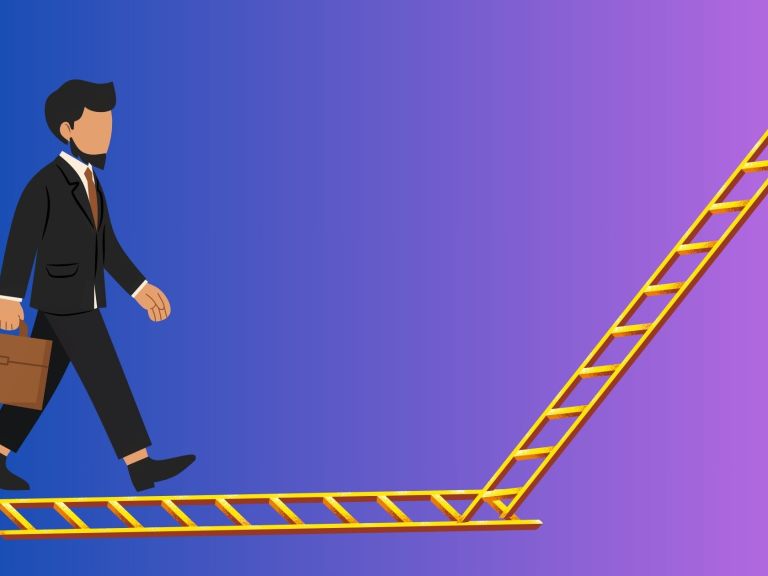
When most people imagine career advancement, they picture a straight ladder leading upward — promotions, bigger titles, larger teams, and immediate salary bumps. But for many LGBTQ+ professionals, the fastest way to increase long-term earning potential isn’t by climbing vertically. It’s by moving sideways. A lateral career move — shifting into a new team, department, or organization at a similar level — can dramatically accelerate future income growth and open opportunities that weren’t available in your previous role. Here’s why lateral moves are often an underrated but powerful strategy for building long-term financial momentum.
A Lateral Move Can Lead to Higher Pay Down the Line
Even if a lateral shift doesn’t come with a raise, it can set the stage for significantly higher earnings in the future. Queer professionals — especially those who have experienced underpayment, bias, or slow internal advancement — may find that their income trajectory jumps faster when they change environments rather than wait for internal promotions.
A lateral move can position you in a place where:
- The compensation structure is stronger
- Raises and promotions happen more regularly
- Your skills are valued at a higher market rate
- You have access to new budgets or higher-paying departments
In this way, a sideways move becomes an income accelerant.
It Can Move You Into Higher-Value Skill Sets
Sometimes the roles that pay the most require experiences you can’t gain where you currently are. A lateral move offers the chance to deepen or broaden your skill set without having to take a step back.
This might look like shifting into:
- A more technical role
- A department with stronger visibility
- A customer-facing or strategy-oriented team
- An industry with higher salaries
Building these skills not only increases your immediate market value — it also strengthens your negotiating power when you pursue future roles.
Lateral Moves Can Place You in Environments Where You Are Seen and Rewarded
For many LGBTQ+ professionals, income growth is directly tied to workplace culture. If your current team or manager doesn’t see your potential, or if bias is limiting your advancement, you may wait years for a promotion that never comes.
A lateral move can give you:
- A manager who advocates for you
- A team where your contributions stand out
- A company that invests in talent development
- A culture where you’re not undervalued
When you’re in a place that recognizes your impact, income growth tends to follow.
Your Network — and Opportunities — Expand Dramatically
A lateral move introduces you to new colleagues, leaders, mentors, and collaborators. And often, your next high-paying opportunity comes from someone who has worked with you directly.
A broader network increases access to:
- Higher-paying openings
- Referral bonuses
- Internal mobility
- Sponsorship opportunities
For queer professionals who may not have inherited networks or industry connections, expanding your circle is a form of economic power.
A Lateral Move Can Prevent Burnout — Which Protects Your Earning Power
Burnout slows career progression. If you’re overextended or unsupported in your current role, your ability to perform, grow, and negotiate is impacted. A lateral move can provide a reset: a healthier workload, a more affirming team, or a manager who supports your development.
Greater wellbeing often translates into:
- Better performance
- Stronger confidence
- More energy to upskill
- Increased readiness for future promotions
Taking care of yourself is part of income acceleration.
A Side Step Can Be Your Fastest Step Forward
A lateral move isn’t settling — it’s strategy. For LGBTQ+ professionals building careers in systems that weren’t always designed for us, lateral moves provide access, visibility, skills, and environments that unlock higher earning potential. Income growth doesn’t always come from climbing upward. Sometimes, the smartest move is sideways.