
Long before terms like “crowdfunding,” “cooperative economics,” or “community investment” became mainstream, LGBTQ+ communities were already living these principles. For generations, queer people built their own systems of support because many social, medical, and economic institutions excluded or neglected them. These mutual aid practices weren’t just crisis responses — they helped shape queer culture, survival, and economic resilience.
Mutual Aid Rooted in Necessity
Queer people have historically faced barriers to housing, employment, healthcare, and safety. Without reliable institutional support, LGBTQ+ communities created their own informal economic networks: shared apartments, pooled cash for emergencies, rotating caregiving, and consistent emotional and material support. These practices weren’t defined as “economic strategies” at the time — they were simply how queer people kept one another alive.
Lesbians’ Essential Role in the AIDS Epidemic
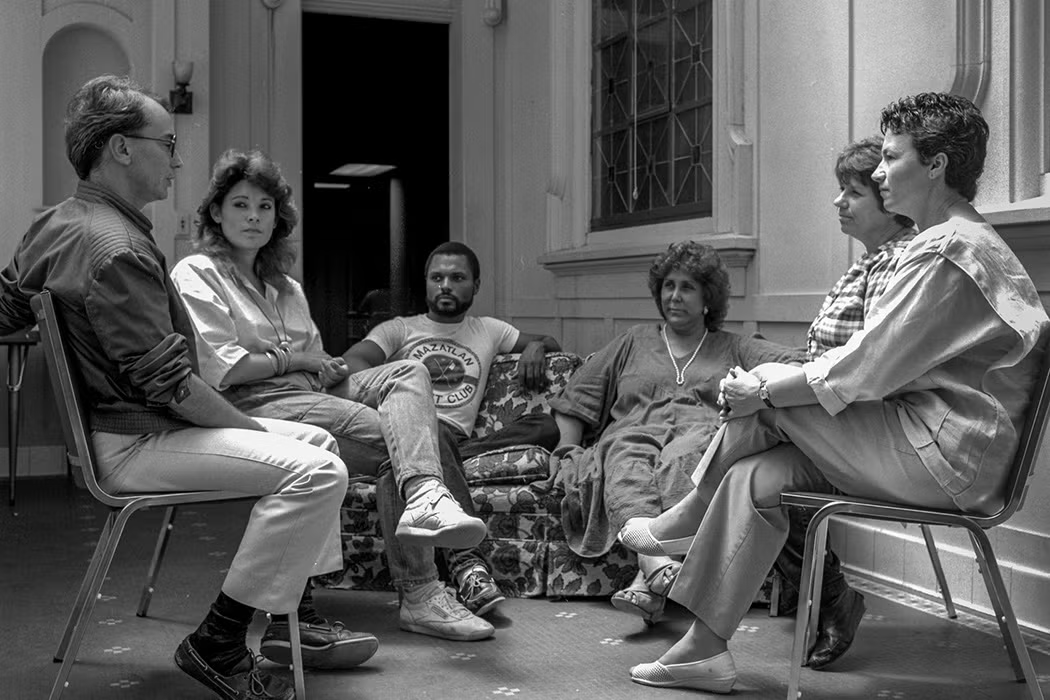
One of the clearest and most powerful examples of queer mutual aid took place during the AIDS crisis. As government institutions failed to act and many families rejected their loved ones, lesbians stepped up in monumental ways. Lesbian nurses, volunteers, and activists became caregivers for gay men at a time when fear, stigma, and misinformation made compassionate care rare.
They prepared meals, administered medications, cleaned homes, attended hospital visits, and offered companionship during periods of extreme isolation. Beyond caregiving, lesbians organized fundraisers, mobilized education efforts, and helped create the infrastructure for HIV/AIDS activism. Their collective labor — emotional, physical, and economic — strengthened the broader LGBTQ+ community during one of its darkest eras.
The Shanti Project and the Roots of Modern Caregiving
Another profound example comes from the Shanti Project in San Francisco, founded originally to support people with life-threatening illnesses. During the early AIDS crisis, Shanti became a vital lifeline for those who were sick, isolated, or abandoned by traditional support systems. Volunteers — many of them LGBTQ+ — provided in-home emotional support, practical assistance, and dignity-centered care to people dying of AIDS.
Shanti’s approach emphasized presence, compassion, and nonjudgmental support. It became a model for community-based caregiving across the country. The project demonstrated how queer-led mutual aid could fill gaps left by public institutions while building a culture rooted in empathy and shared responsibility.
Chosen Family as Economic Infrastructure
Chosen family has long functioned as both emotional and economic support. Queer people routinely share housing, split bills, organize caregiving schedules, support one another through job loss, and pool resources for survival and celebration. These systems act as informal cooperatives that redistribute labor, money, and emotional care.
Ballroom Houses and Collective Survival
Ballroom culture, particularly among Black and Latinx LGBTQ+ communities, created house systems that provided shelter, mentorship, material resources, and stability for members. These houses were more than social structures — they were economic systems ensuring survival, safety, and belonging.
Digital Queer Economies Today
Modern queer mutual aid thrives online, where LGBTQ+ people mobilize funds for medical bills, rent, legal support, and community initiatives. Digital creators, entrepreneurs, and mutual aid organizers have expanded traditional queer economic networks into global systems of care.
Mutual Aid Is a Blueprint for the Future
LGBTQ+ communities have always known how to build safety through shared resources. Our history of mutual aid — from chosen family structures to Shanti volunteers to lesbian caregiving networks — demonstrates that collective support is one of our greatest economic tools. It remains not only a legacy but a roadmap for how queer communities continue to thrive.